
Intrigue has been a constant subtext to cricket in the subcontinent in general, and Pakistan in particular. Once volatile and unpredictable, Pakistani cricket has, in recent times, been predictably messy and controversial, the latest events in England doing little to edify its image even as it struggles to come to terms with the reality that the glory days of the past on the field are a distant memory.
Imran is a charismatic, talismanic personality who did more to raise the stock of the nation itself than anyone else. Having cut his teeth as a raw, unpolished, fiery pacer in Sussex where he was one half of a feared new-ball combine alongside South African Garth le Roux, he blossomed into a fabulous all-rounder who formed a famed quartet — alongside Ian Botham, Kapil Dev and Richard Hadlee — for much of the 1980s. With the passage of time and the inevitable onset of injuries, he dropped pace but didn’t lose much by way of impact, while upping his game a notch or three as a batter as compensation.
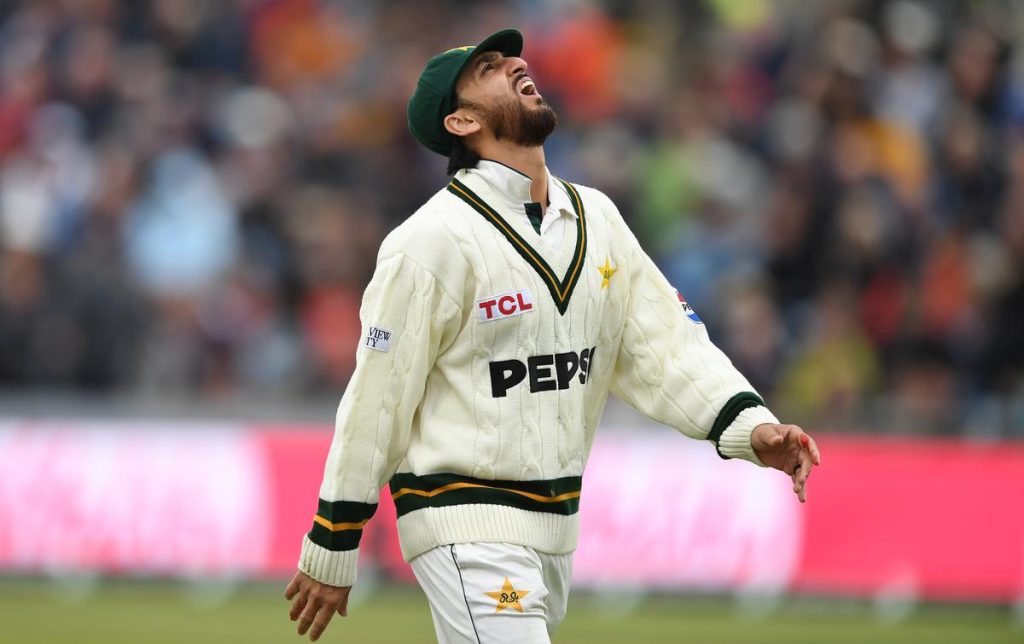
His crowning glory was leading Pakistan, against all odds and from the brink of elimination, to the 1992 World Cup title. Indeed, Salman had led Pakistan in the first Test in Leeds in the absence of Babar Azam, out injured; England won by an innings and 103 runs at Headingley, and once Babar was declared fit for the Lord’s showdown, Salman was dumped from the playing XI for the second Test. Pakistan have roped in, and parted ways with, numerous leading luminaries as head coach, including Mickey Arthur, former Australia paceman Jason Gillespie and Gary Kirsten, the ex-opener from South Africa who coached India to the 50-over World Cup crown in 2011 and is now the head coach of the Sri Lankan national team. Apart from making it to the final of the T20 World Cup in Melbourne in 2022 when they were bested by England, they haven’t quite matched history and expectations with performances. Their Test displays have been even more disappointing – they haven’t so much as threatened to make it to the final of the World Test Championship over the first three cycles and are currently at the bottom of the nine-team standings of this latest campaign, with just 16 points from eight matches.
Because of the pressure of expectations alone, kiwi Hesson is the latest in a long line of big-ticket names to embrace one of the most demanding tasks in world cricket, and not necessarily. But more than as a player, Imran’s legacy was cemented through his leadership abilities. His arresting presence was unmistakable on the field of play, and even when he was involved in a captaincy musical chair battle of other people’s making with Javed Miandad, he was unmissable. While others congregated around the bowler to congratulate him on taking a wicket, Imran would walk regally, at his own pace, from mid-on or mid-off; as he neared the protagonist, the rest would respectfully make way for him to pat the gushing hero on the back. Imran wasn’t given to grand gestures, but his wards knew that a word of praise from the skipper was worth all the riches in the world. The conquest of England at a raucous MCG was the ultimate vindication of his inspirational qualities and the great gift of getting his colleagues to perform above themselves, to understand and believe that nothing was beyond them. He didn’t entirely endear himself to thousands of his countrymen — among them some of his own teammates — and women by focussing more on the cancer hospital he was to open in Lahore in his late mother’s name instead of eulogising the historic triumph at the post-match festivities, but even his critics acknowledged that his heart was in the right place. Imran’s plunge into politics was going to be interesting, to say the least. His imprisonment, his deteriorating health and concerns over his well being drove Greg Chappell, the former Australian captain and one of Imran’s contemporaries, to spark an initiative that involved several internationals, many of them skippers of their respective national sides including our very own Sunil Gavaskar, to make an impassioned official plea to the Pakistani dispensation to ensure that Imran is treated with the respect he deserves and is looked after from a medical perspective. It’s against this backdrop that the host broadcaster of the England-Pakistan Test series aired an interview, conducted by former England captain Mike Atherton at the Long Room, with Imran’s sons Sulaiman and Kasim Khan during the Lord’s Test. The Pakistan Cricket Board contemplated a boycott of the match midway before saner counsel prevailed, but that seemed to have deserted them at the conclusion of a second heavy defeat in two matches, at the end of which came the dramatic decision to recall half the team as well as Sarfaraz Ahmed, the head coach, and Umar Gul, the fast-bowling coach. Among the players bundled on to the plane back home were former captains Salman Ali Agha and Mohammad Rizwan. Also asked to fly back home was Imam-ul-Haq, the bespectacled opening batter and the nephew of revered and adored former captain Inzamam. Imam did not bat in either innings at Lord’s with a low-grade calf strain which itself is now being probed, all of which has contributed to a horrible mid-series fiasco that incoming head coach Mike Hesson and Ashley Noffke, Gul’s replacement, have been burdened with. Being the coach of the Pakistan team is not a double-edged sword; however, the sword constantly hovers overhead, despite the fact that almost all coaches have been compelled to function with one hand tied behind their back. Pakistan’s recent cricketing journey has been anything but successful. To say that their chances of finishing in the top-two this time too are more miniscule than finding snow in the desert will be a massive understatement.
Historically, elected Pakistani governments have operated under the iron fist of the army but Imran was his own man, so it was inevitable that there would be tension – and that’s putting it mildly. Like Salman, Rizwan has captained the national team previously but paid the price for a middling run of scores.