
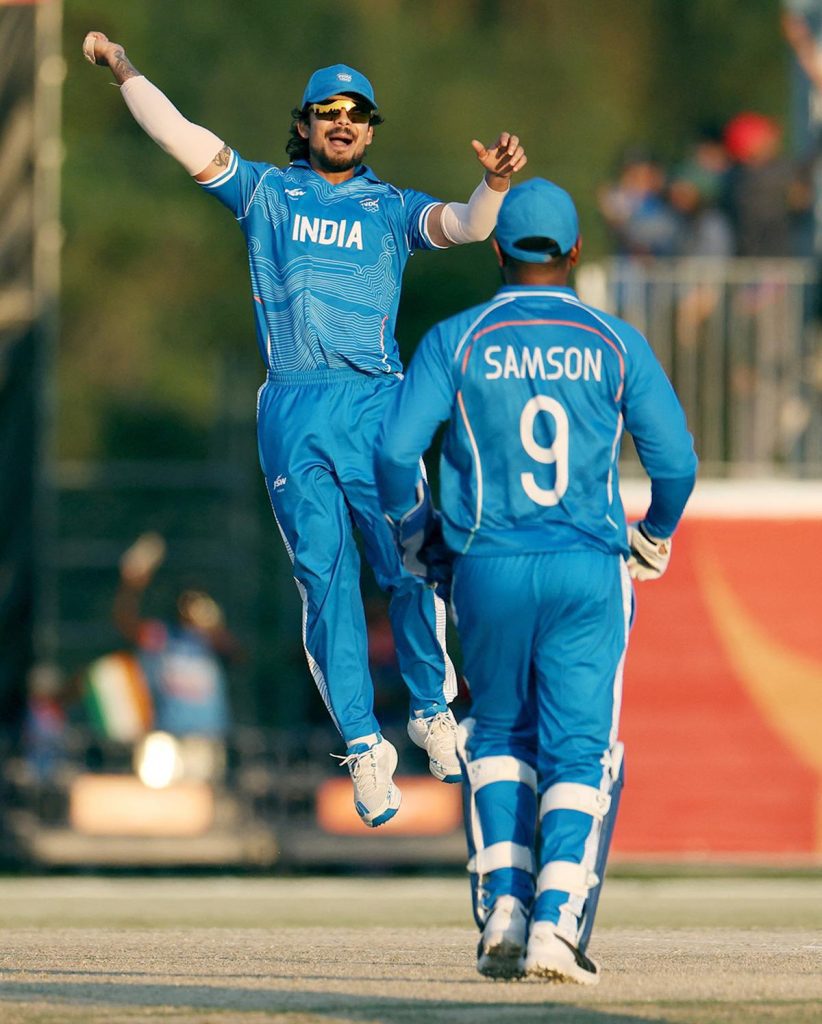
To be installed the overwhelming favourite ahead of any major sporting extravaganza is a double-edged sword. The moniker is suggestive of a formidable individual (or team) clearly more skilled, more temperamentally adjusted, and the most likely to go all the way, but it also comes with a rider. You are marked; the rest will be doubly determined to hunt you down and add a coveted scalp to their kitty.
Cricket authorities have worked tirelessly in ensuring the inclusion of the sport in multi-discipline events like the Asian Games and the Olympic Games. The International Cricket Council’s avowed goal is to take the discipline to as many countries as possible. This time around too, India were involved in a three-match One-Day International series against West Indies at home; the first of the ODIs was played on September 27, a day before Shreyas’ boys began their title defence in the quarterfinal against Afghanistan. While there are several players who are certainties in both white-ball formats internationally, India weren’t too weakened by the absence from the 50-over set-up of Shreyas, the ODI vice-captain, and Ishan Kishan. Sure, they missed bowling spearheads Jasprit Bumrah and Axar Patel – Shubman Gill’s unit conceded more than 1000 runs to the Caribbeans in the three fixtures – but what is the weight of an ODI series with little immediate import compared to an Asian Games gold medal? Having identified the 20-over format as the vehicle to drive that ambition, it has handed over memberships to a host of nations – the official T20I team rankings includes a staggering 102 countries – and conferred international status on matches involving even, say, Lesotho and Costa Rica, ranked 89th and joint-94th respectively.
The previous Asian Games overlapped with the 50-over World Cup hosted by India, thereby comprehensively ruling out the presence in China of the main squad. Perhaps Shreyas might not say so publicly, but one is pretty certain that he would cherish an Asian Games gold medal more than being on the right side of a 2-1 scoreline against West Indies in a largely meaningless ODI series which, even with the World Cup a year away, was largely bereft of context. Brought back to the T20I fold after two and a half years and installed as the captain with India deciding to move on from Suryakumar Yadav – World Cup-winning skipper but short on runs – he must have felt the heat after surrendering 0-2 to Ireland and 0-4 to England in his first two assignments. 4 in the lead-up to and during the World Cup.
It therefore makes perfect sense to honour their presence in these big bashes by sending out the strongest team possible under the circumstances. Because he is the designated ODI vice-captain and will be expected to play a big part with the bat at No, the fact that he had most of his first-choice personnel around would have aided the process of refamiliarisation and put him in a good headspace, imperative. Long before a single ball was bowled at the Asian Games, the Indian men’s cricket team was fancied to come up trumps. The women too, of course, considering that they had just blazed to the Asia Cup in Dubai, sweeping everyone in front of them. Harmanpreet Kaur’s intrepid bunch kept its tryst with gold in commanding fashion, brooking no opposition and flexing its not inconsiderable muscle with aplomb. Immediately thereafter, the spotlight turned to Shreyas Iyer and his lads, up against four other continental Test-playing nations who chose to put out experimental rather than full-strength outfits. One of the talking points in the lead-up to the Asiad was why India’s selectors had chosen to go with the tried and the tested. People harked back to the previous event in Hangzhou three years back, when Ruturaj Gaikwad led a second-string team to the gold medal after the final against Afghanistan was washed out, and wondered why a similar squad wasn’t pieced together. For more than one reason, it is apparent. Batathons on flat tracks that took away the joy of a contest might have appealed to the spectators but it did little to edify the sport. But then, we digress. For Shreyas, this was a much-needed victory. The clean sweep against Afghanistan last month must have lifted his morale, but this campaign, away from probing eyes, would have facilitated his reintegration to progress further.
There is no gainsaying what personnel the selectors would have picked in the absence of the said overlap; that’s delving into the realms of the hypothetical, which serves little purpose.