
In an era where opening the batting in Test cricket revolved around giving the first hour, if not the first session, to the bowlers, K. Srikkanth was a glorious exception to the accepted rule. High on risk and therefore a little short on consistency, the maverick from Tamil Nadu was unstoppable when in the mood, treating the best fast bowlers in the world with utter disdain.
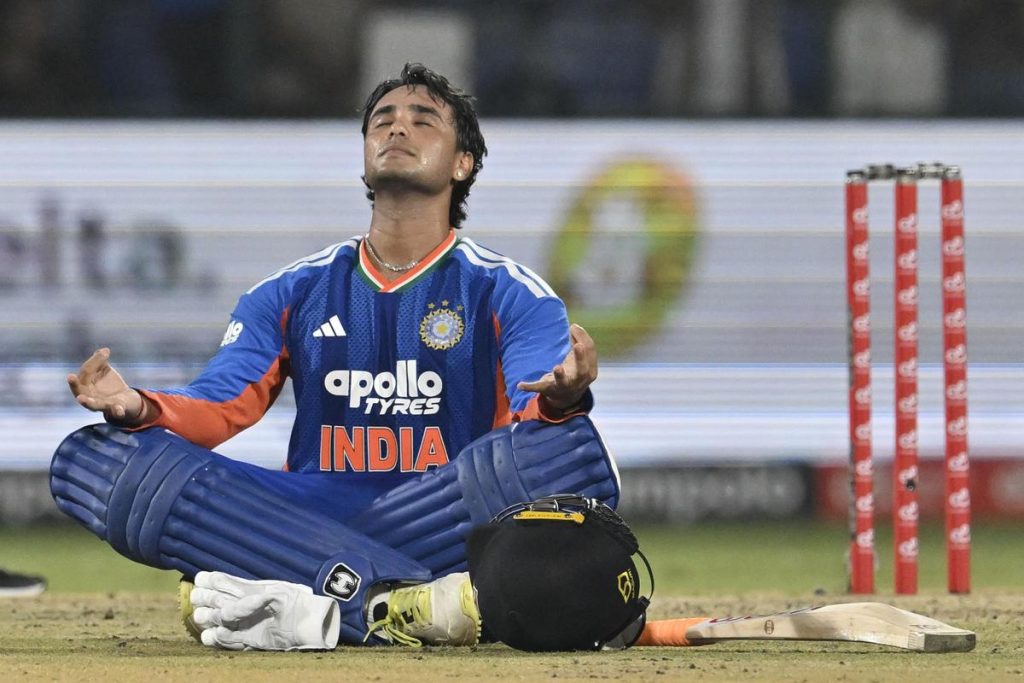
With complete and utter disregard for reputations, and with a nonchalance that comes only to the chosen few. They aptly illustrated the full weight of his dominance against a bowling group that is pedestrian by no stretch of the imagination. Afghanistan might be a little undercooked when it comes to batting in the topmost echelons, but as a bowling unit, they hardly suffer in comparison. Rashid Khan, Fazalhaq Farooqi, Mujeeb Ur Rahman and Mohammad Nabi form a formidable quartet, but Abhishek left them quivering in their collective boots, waiting for and ruthlessly punishing any indiscretion in length or direction with the most scything, punitive of willows.
Mark Greatbatch at the 1992 World Cup, and Sanath Jayasuriya in 1996, are often eulogised for changing the face of opening the batting, but long before these two left-handers left their mark, Srikkanth had made hitting over the top fashionable. The hundred included nine fours and 10 sixes – 96% of his runs came in boundaries – and by the time he was dismissed, he had added one more six in his final score of 108, off a ridiculous 34 balls. It is the fastest T20I hundred against a full-member nation, the fastest ton internationally in the 20-over game by a batter from a full-member country. Quips that Abhishek defeated the Afghans by 14 runs weren’t just cute.
Both openers, the former converted from a middle-order practitioner, signed off with two Test triple tons apiece – with only the great Don Bradman and Brian Lara for company in that exclusive club of four – to reiterate that aggressive batting need not be at the expense of sustained masterpieces. Virender Sehwag and Chris Gayle made a name for themselves by beautifully fusing untold havoc with stunning consistency. A Test average of 29.88 from 43 matches, and a 50-over international average of 29.01 spread across 145 innings, do not paint an accurate picture of the potential for mayhem that he possessed. In the two preceding matches of the series at the same venue, Abhishek had reeled off scores of 82 (32b) and 39 (19b) respectively. His lowest strike-rate (205.26) came in game two, sandwiched between similar efforts of 256.25 and 317.64, the latter killing any competitive interest in the dead rubber just a quarter of the way into the no-contest.
Because the entertainment he provided and the value he brought with him to the batting crease were beyond parallel in that time and age, srikkanth was a lot more than the sum of his six international hundreds and the highest individual tally in a low-scoring final of the 1983 World Cup,.
Given that eight-ball 25s are seen as being more crucial than 35-ball half-centuries, strike-rate would appear to be a logical route to deciding the significance of a batter to his team’s fortunes, but strike-rate alone can’t be the criterion if it rewards only cameos and disregards more meaningful contributions. No one expected him to bat like Gavaskar, studied in defence and treating each ball assiduously on its merit because, well, he wouldn’t be Srikkanth then, would he? Because t20 cricket is seldom about quantum, in so many ways, that is incongruous.
First Sunil Gavaskar, and then Kapil Dev, encouraged Srikkanth to be himself, to bat with natural flair and flamboyance. And so, the right-hander went on a rampage whenever he could. Every year since its inception, the Indian Premier League rewards the highest scorer of the season with the Orange Cap. It is about impact, it’s about the value of the runs made.
Strategies chalked at team meetings, he was told, need not concern him.