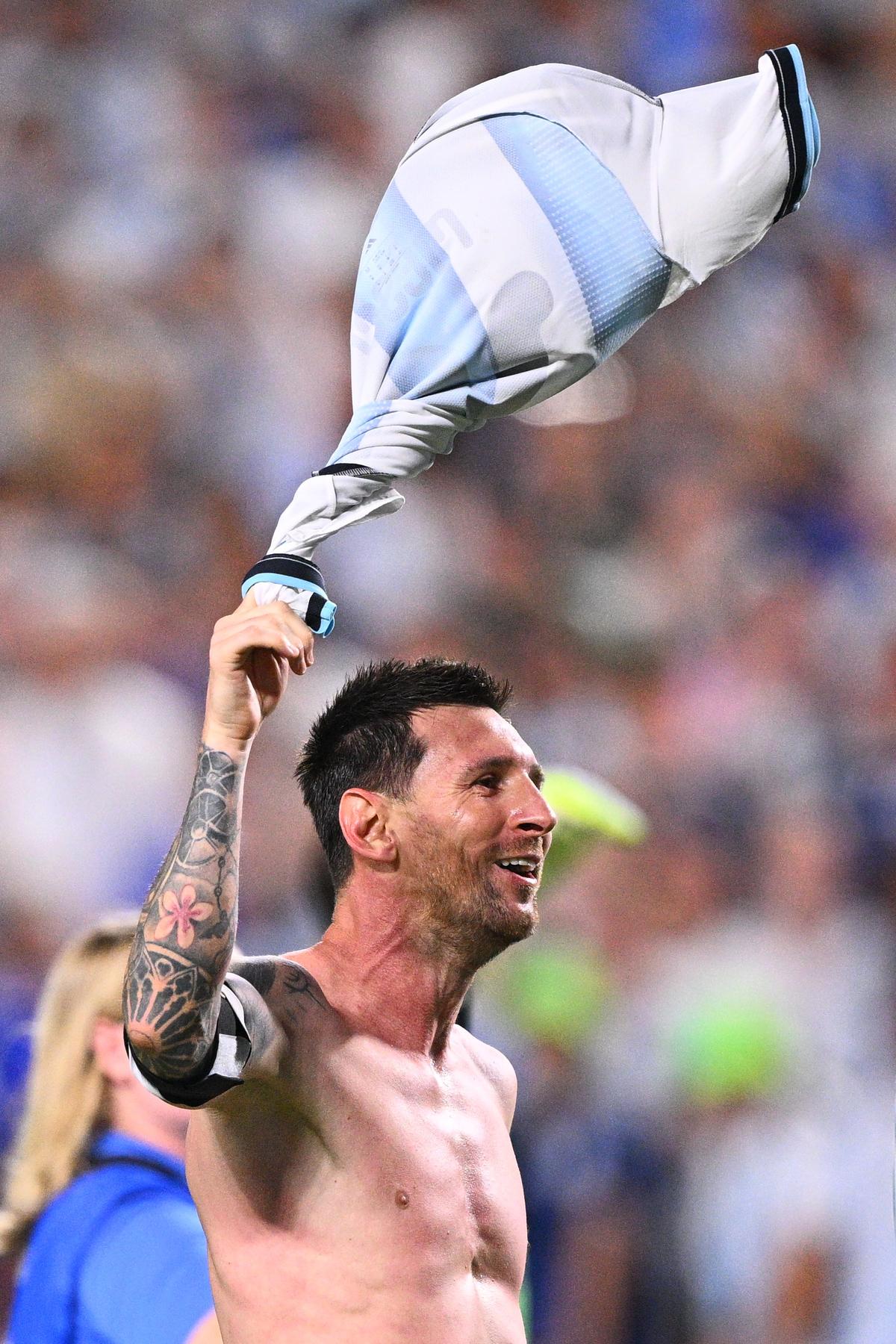
Tributes will keep pouring in. Highlights will be replayed on loop. Memories will linger for eternity.
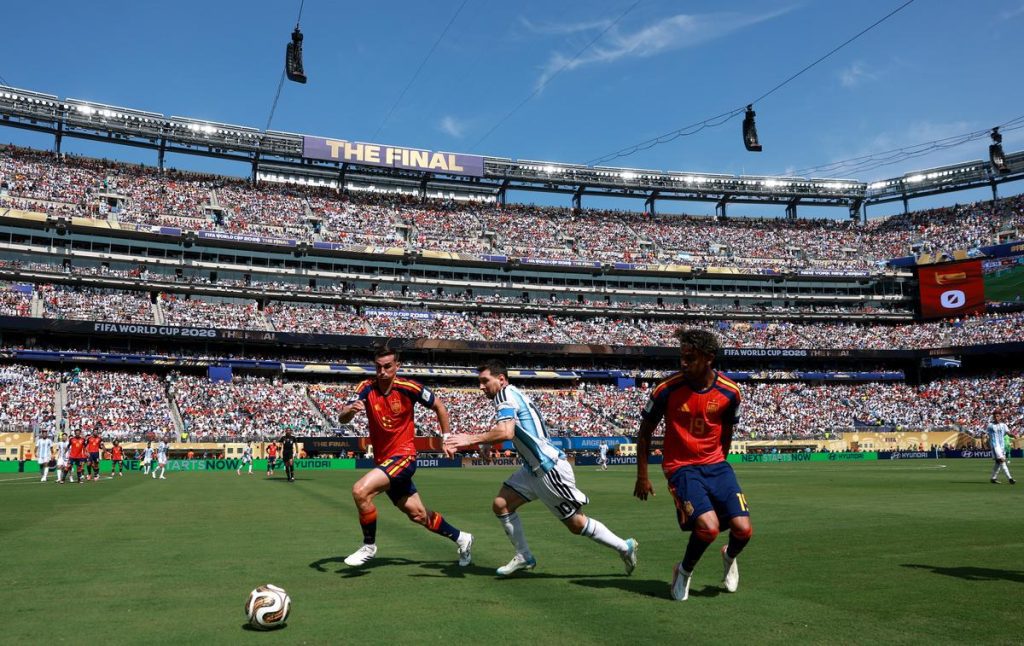
But it won’t be the same as when the Argentine demigod dazzled with the ball at his feet and carved a lasting legacy at the international level, much like how Diego Maradona did for Argentina and Pele for Brazil before him. A little more than a month after losing to Spain in the World Cup final and a few weeks after his father Jorge’s passing away, Messi had no more to give by his own admission. Lionel Messi in action in the World Cup final against Spain. | Photo Credit: Getty Images In a way, the fact that Messi’s time in the Argentine jersey concluded with heartbreak in the World Cup final was an apt encapsulation of his journey. As he dribbled past defenders and netted a truckload of goals on his way to a wave of success with Barcelona at club level in the early years, a sense of alienation with fans in his homeland grew stronger. Cut to the just-concluded global spectacle, Messi, as if untouched by the passage of time, was remarkably wielding the same influence for the defending champion.
The forward, all of five feet and seven inches in height but a towering figure when it came to his deeds on the football turf, has walked into the sunset after 21 years of carrying the South American nation’s expectations with grace and grandeur. Through those years, whilst playing 207 times, scoring 125 goals and winning one World Cup and two Copa America titles, the 39-year-old’s ability to illuminate a game with his stardust stayed undiluted. A little more of Messi’s genius — be it his nimble-footed manoeuvres, magnetic control of the ball, sudden burst of speed, 360-degree vision and wide range of passing — will be glimpsed in whatever is left of his contract with Major League Soccer (MLS) club Inter Miami. That was telling, for the great man, even at 39, had not shied away over the summer in North America from putting his heart and soul into trying to win a second straight World Cup for his country. He came up only narrowly short as Spain dominated with its fluid, possession-heavy style to win 1-0 in the final, a reminder that perfect farewells tend to elude even perfectionists of Messi’s ilk. The first half of his international career, which began with a sending-off on debut against Hungary in 2005, was far from a bed of roses after all. Having left for the famed surroundings of La Masia, Barcelona’s youth academy, at 13, Messi’s allegiances were routinely brought into question. The narrative received further ammunition even as Messi guided Argentina to the finals of the World Cup in 2014 and the Copa America in 2015 and 2016. The abyss was seemingly reached in the 2016 continental showpiece, when his penalty miss in the shootout of the summit clash against Chile in New Jersey condemned the proud nation to its third straight runner-up finish. Even then, the absence of a World Cup — the holy grail of sporting events — hovered like a dark cloud over the forward going into Qatar in 2022. Cold logic suggested that Messi, who was 35 and hadn’t succeeded in four previous attempts to hoist the ultimate prize, was well past his prime to spur Argentina to glory. He scored as many as eight times, taking his overall tally in the World Cup to 21 goals.
The exit, which was announced via a long and emotional Instagram post on Monday, came as no bolt from the blue.