
Even before November 1999, a host of exceptional wicketkeeper-batters had graced the international scene, not least India’s own Farokh Engineer and the wonderful Andy Flower from Zimbabwe. But from the time a left-hander from Western Australia stormed the Test firmament at the Gabba in Brisbane nearly 27 years back with a bruising 81 on debut, against a shell-shocked Pakistani outfit, wicketkeeper-batters have been looked at in an entirely different vein.
Karthik wasn’t the first Indian gloveman to play as a specialist batter. A couple of decades on, Chandrakant Pandit played as a middle-order bat with Kiran More slotting in as the wicketkeeper. Such was Karthik’s great natural ability – which he didn’t maximise, he will acknowledge – that in the Dhoni era, India fielded him as a full-fledged opener overseas, and with no little success.
Nearly four decades before him, Budhi Kunderan donned that role, even opening the batting in England in 1967 alongside designated wicketkeeper Engineer. Alongside Wasim Jaffer, Karthik formed an excellent opening combine in Bangladesh and England in 2007, bringing up his only Test ton across the border and bettering that effort by emerging as India’s highest scorer in England, when they last won a Test series there by a slender 1-0 margin. The generational talent that Pant is, he kept almost exclusively from the time he made his Test debut in Nottingham in August 2018 and made a stunning 114 in his third appearance at the Oval till his single-car accident in December 2022 when India were suddenly forced to scramble for a replacement. Bharat, from Andhra, won the early nod for the home Tests against Australia in February 2023 and donned the big gloves in the final of the World Test Championship against the same opponents that June. Bharat reclaimed his spot behind the sticks against England at home and played himself out of the XI following scores of 41, 28, 17 and 6 which meant that in seven Tests and 12 innings, he only averaged 20.09, a definite no-no given that the wicketkeeper’s was no longer a single-discipline specialised slot.
KL Rahul was nominated the first-choice stumper for the two Tests in South Africa towards the end of the year, more to provide stability and class to the lower order in a line-up from which very few had played in South Africa previously.
Adam Gilchrist rewrote the dynamics of Test batsmanship. But it was in the red-ball game that Gilchrist set stall as a pioneer, providing not just meaningful heft to the Australian batting but scoring runs at such a furious clip that opponents were often ducking, unsuccessfully, for cover. The sight of Gilchrist, the destroyer supreme, striding in purposefully at No. Gilchrist seldom disappointed; when he scored his runs, he did so with not just panache and chutzpah but also with a violent streak that damaged bowling figures as well as egos. How could anyone bat with such unchecked aggression at No.
He was a destructive opener in limited-overs cricket long before he played his first Test, and reeled off numerous wondrous knocks, including in the final of the 50-over 2007 World Cup when, with a squash ball for company, he bludgeoned his way to 149 against Mahela Jaywardene’s Sri Lanka in a decisive effort that took Australia to a hat-trick of titles. For the most part of his glittering career that encompassed 96 Tests, the left-hander had the luxury of batting behind a grand top six that used different methodologies to subjugate bowling attacks in all parts of the world. 7, was dispiriting or exhilarating, depending on which side of the fence one was. 7? How could someone fuse a no-holds-barred approach with such consistency (as an average of 47.60 at a strike-rate of 81.95 will unequivocally testify to)?
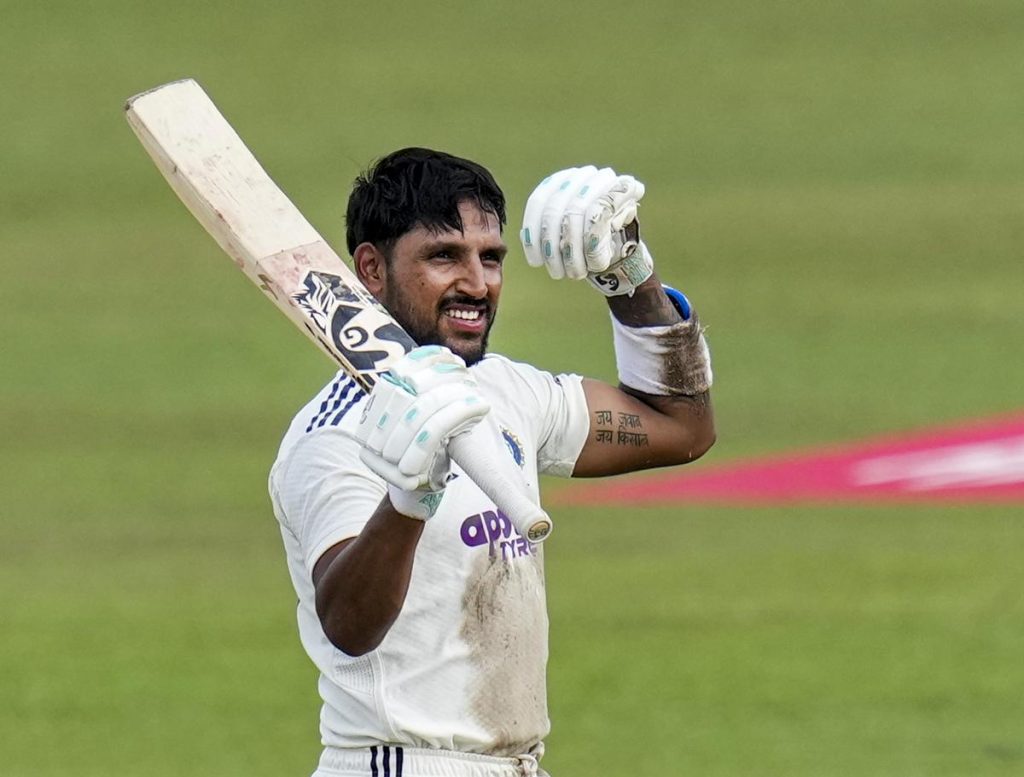
Out went the call to Jurel for the third Test in Rajkot with the series finely poised at 1-1, and it was immediately apparent that India had hit upon a gold mine. The right-hander made a poised 46 on debut, and upped the ante in the next match with scores of 90 and 39 not out, the first ensuring that India didn’t end up conceding a massive lead and the second taking them home in a tense run-chase when he and Shubman Gill put on 72 for the unfinished sixth-wicket stand. Jurel warmed up nicely for the Test series to follow with scores of 141 not out, 14 and 53, and it was no surprise that he was picked for the first Test in Galle, when he weighed in with 51 and 7 in a winning cause.
Because of his felicity against the turning ball, towards the end of June, he was a part of the India ‘A’ squad that travelled on the ‘shadow’ tour of Sri Lanka for two unofficial ‘Tests’, ostensibly at the insistence of Gambhir. But instead of pressing the panic button and looking elsewhere, the decision-makers continued to invest their belief in him and Jurel has responded in style.