
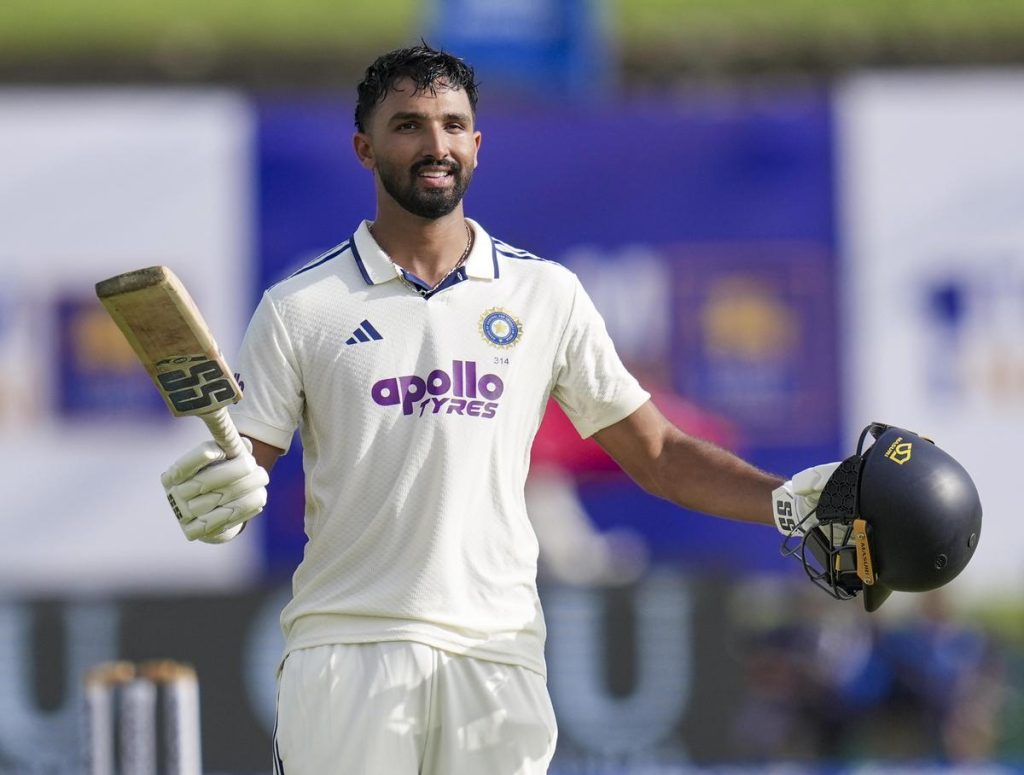
A scrambled single to mid-off, a little leap in the air. The helmet whipped off, arms held half-aloft, his face bathed in a million-dollar smile. And just like that, Devdutt Padikkal became the 84th player to conjure a Test century for India.
By the time he was finally dismissed after five and a half hours of the most compelling presence in the middle, Padikkal had eased — there really is no more appropriate word — to 167. In all the years that India have travelled to Sri Lanka, only Sachin Tendulkar (203), Virender Sehwag (201) and Shikhar Dhawan (190) have registered a numerically more substantial individual score. That Padikkal wasn’t satisfied with just a tryst with three-figures but aimed bigger and higher must delight Gill and Gambhir no end.
His debut, against England in March 2024, was a proverbial last-minute development, after Rajat Patidar was ruled out with an injury to his left ankle on the morning of the match. 4, stroking his way to a majestic 65 marked by handsome strokes through the off-side off the back foot on a surface that encouraged that style of play. Despite having had greater time to come to terms with his overseas debut, Padikkal found little joy in the Western Australia capital in the first innings, nicked off by Josh Hazlewood for a 23-ball duck. He batted with a little more composure in the second innings as he came in on the back of a 201-run opening stand between Yashasvi Jaiswal and K.L. Rahul, but couldn’t progress beyond 25 as he was dismissed for the second time in the Test by Hazlewood.
Summoned at little notice, Padikkal hardly looked out of place at No. His exploits caught the eye of Gautam Gambhir, the Indian head coach, and chief selector Ajit Agarkar. India had rewarded Karun Nair’s stellar domestic run by recalling him to the Test set-up after a long gap on the tour of England last summer, but Karun didn’t exactly cash in, making just a solitary half-century in the final Test at the Oval to play himself out of contention. A disastrous set of matches against South Africa at home in November last meant India had to revisit their options going forward as their World Test Championship aspirations hung by a slender thread. Batters often make minute, conditions-based technical adjustments that are so subtle that they often go unnoticed. In the IPL, for instance, Padikkal relied heavily on an upright stance.
Because someone else has been unavailable, each of the 26-year-old’s caps has come. Because shubman Gill was unavailable after fracturing his left thumb while fielding in the slips in an intra-squad simulation match, eight and a half months later, as India lined up for the first of five Tests against Australia at the sprawling Optus Stadium in Perth, out went the SOS to the Karnataka batter, this time. At KIOC, he worked hard to stay low so that he could get to the pitch of the ball to smother turn. Hard hands are a must in T20 cricket but an absolute no-no on turning tracks, so Padikkal embarked on another exciting journey to consciously keep the hands softer, to drop his wrists, so that he didn’t put the close-in cordon in business.
3 since Gill in September 2024 against Bangladesh in Chennai reiterated that they had yet to button down a one-for-the-future choice. Between the ‘A’ tour in which he scored 12, 67 and 94 and embarking for Sri Lanka again, Padikkal trained hard at the Karnataka Institute of Cricket with personal coach Naseeruddin Mohammed. In the last few years, India have tried out numerous options in a desperate bid to unearth a dependable hand that can steer the ship through choppy waters. That quest has taken them through a fair few names — Sudharsan, the aforementioned Karun, Rahul himself and Washington Sundar — but the fact that no one had scored a Test century from No. Sudharsan emerged as the one that enjoyed the backing of the coach and the captain, but now, Padikkal has stolen a march and has the chance to build on the gains of the Galle Test next week in the Sri Lankan capital. Padikkal’s first of what is certain to be several Test tons was a win for planning and preparation. It wasn’t just mindless, ‘let’s get through the grind’ training; a lot of thought had gone into what were the areas that needed to be addressed. Among them was getting a feel of playing consistently against the red Kookaburra ball, and getting used to different types of spinners — variety- and height-wise — on pitches offering varying degrees of turn in a concerted bid to replicate what was expected to be on offer during the Tests in Sri Lanka.